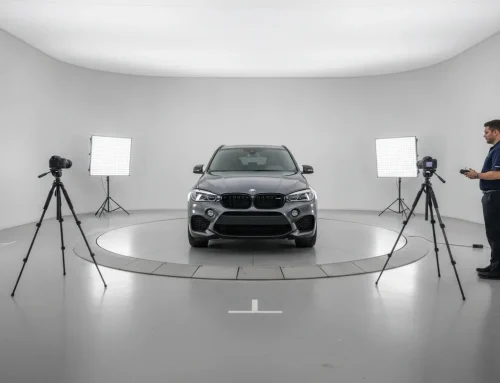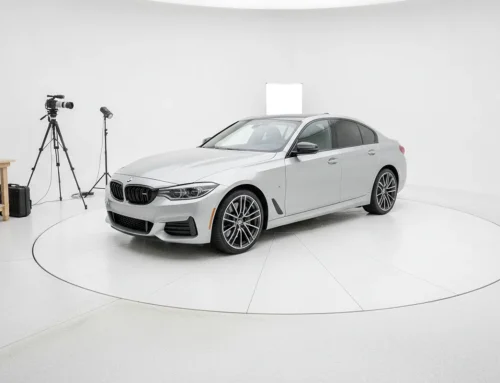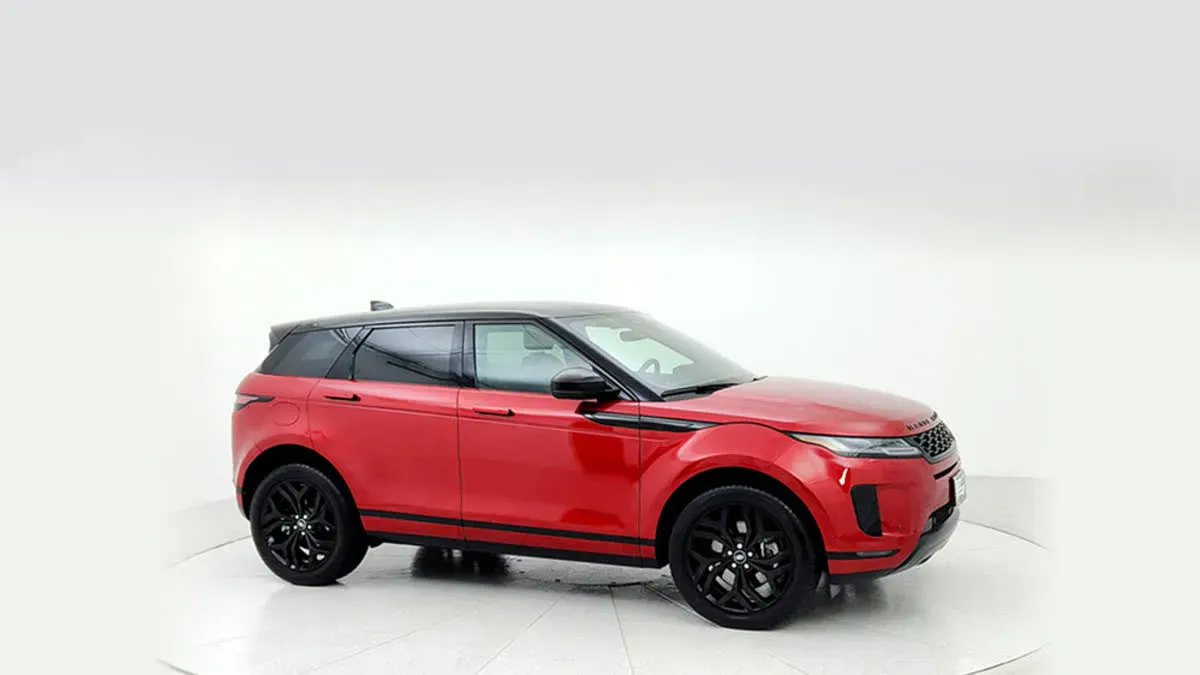
A 360 car turntable gives a dealership one controlled way to shoot the outside of every vehicle. The car sits on a round platform, the platform turns, and the cameras stay put. The result is a set of exterior stills and a spin that look like they came from the same bay, even when different people run the shoot.
This guide is for dealer owners, general managers, and group operators who buy the capture system. It covers the media jobs the table is for, rather than a parts diagram or a price sheet. If you need the basic definition, start with 360 turntable capture and come back here for the listing workflow.
Call EZ360 at (214) 325-1665 to talk through a turntable setup for your inventory.
What a 360 car turntable is used for
Dealers use the table when exterior photos and a spin have to match across a whole inventory. Shoppers compare vehicles on a search results page and a vehicle details page before they visit. Frames that jump in height, crop, or background make the lot look uneven, even when the cars are the same grade.
The table owns the outside of the car. It does not shoot the cabin, the odometer, the trunk, or a wheel close-up. Those stay a separate handoff. Treating the table as the whole photo program is how groups end up with pretty spins and thin listings.
EZ360 sells the platform as the EZTurn, separate from the automated 4K photo studio and from CarMagic AI walkaround software. The product page describes an 18-foot table that EZ360 says can handle motorcycles through heavy-duty trucks. It also describes a reinforced galvanized stainless steel frame, epoxy tops, and a 1.5 HP motor with a variable frequency drive. Those specs are useful product facts, but they do not replace a written photo standard for the bay.
Cox Automotive’s 2025-26 Car Buyer Journey study, published in January 2026, surveyed 2,300 people who bought a new or used vehicle in the prior 12 months. Buyers who completed more than half the process online reported the highest satisfaction. That is a reason to treat listing media as a sales tool. It is not a promise of more calls or a faster sale from a spin alone.
Think of the table as the exterior station in a larger day. Recon releases the car, the photo bay records the outside, a second pass records the inside, and publishing sends both to the site. If the exterior station is informal, every later step inherits a different crop.
Which exterior views the table should produce
Write the shot list before the first vehicle rolls on. A useful set is small and repeated. Most rooftops need the same exterior angles on every VIN, plus one spin built from those frames or from a continuous turn.
| Media job | What the table does | What it does not do |
|---|---|---|
| Front three-quarter still | Stops at one mark so the nose matches. | Does not open the hood or show the engine. |
| Side profile | Holds camera height on the long side. | Does not fix a turned wheel. |
| Rear three-quarter still | Gives the same tail view each time. | Does not open the trunk or show cargo. |
| Exterior 360 spin | Turns the car for fixed cameras. | Does not shoot the cabin or the dash. |
Keep the background the same for the whole set. A white wall, a sweep, or a controlled bay is the point. If one rooftop shoots on the table and another shoots in the lane, the group site will still look like two brands.
Stop the table at marked angles for stills. Let it complete a smooth turn for the spin. Mixing a freehand walk around the car into the same set is what breaks the match. The operator guide for placing one vehicle is on car on turntable. Follow that sequence instead of inventing a second one at each store.
Name the angles in the standard, not in a chat thread. A front three-quarter, a straight side, and a rear three-quarter cover most search-page needs. Add a dead-front or a dead-rear only if your site template calls for them. Extra angles that nobody publishes waste bay time, and they train the team to improvise.
Trucks and low cars need the same center, not the same zoom guess. A heavy-duty truck fills more of the frame than a compact car. That is fine if the camera height and the turn center stay fixed. It is not fine if someone steps the camera back for trucks and forgets to step it forward again.
How fixed cameras and a slow turn create a match
The match comes from two locked choices. The camera does not move, and the vehicle rotates on a known center. Once the lens height, distance, and aim are marked on the floor, every car that is centered on the table fills the frame the same way.
Controlled speed matters more than a dramatic spin. A controlled start and stop keeps the body sharp. EZ360 says the EZTurn motor uses a variable frequency drive for that control. A table that lurches will blur the nose and the tail even when the lights are right.
Lighting should stay fixed as well, because moving a light between vehicles makes the paint color shift in the feed. Diffuse light, aimed the same way every time, is enough for a table-only bay. A full studio adds photographic walls and a computerized production system on top of that.
Publish the same crop, because shoppers notice when the spin player and the stills use different framing. The EZTurn page describes media that can be upscaled for display and a vehicle-details player with zoom. Those are output tools, and they cannot repair a car that was parked off center.
Check one finished spin before the bay gets busy. Play it on a phone, not only on the studio monitor. Look for a jump at the start and end of the turn. Look for a wheel that points out. Look for a mirror that is folded on this car and open on the last one. Fix the setup before you run the rest of the batch.
Groups with more than one store should share the marks, not just the brand voice. A taped camera spot and a written lens height travel better than a sample gallery. When a new operator starts, they copy the marks. They should not copy whatever the last photographer liked that day.
- Mark camera positions and light stands so the next shift does not guess.
- Center the vehicle and set the wheels straight before the first frame.
- Capture the agreed still angles, then one full exterior spin.
- Hand the vehicle off for interior and detail photos that the table cannot take.
- Review one set against the last VIN before you publish the batch.
When a table is enough and when you need the studio
A standalone table fits a store that already has a clean bay, steady light, and a person who will run the same steps. A table solves rotation, but it does not build the room, the cameras, or the publishing path by itself.
The automated photo studio is a different offer. EZ360 describes it as a wall-to-wall package with a turntable, diffuse LED lighting, photographic walls, 4K cameras, and computerized capture. An operator still shoots the interior panorama and the detail photos. The studio page gives 24 by 27 feet as an example of a small room, not as a rule for every install.
Use the table alone when exterior consistency is the gap and the bay is already usable. Move to the studio when background, light, and camera positions change from shift to shift, or when several rooftops need the same look without a photographer on each one. Do not treat the studio price as the table price. Advertised starting figures, and what an installed quote includes, belong on car turntable cost.
Outdoor walkaround software is a third offer. CarMagic AI, shown on the SpinSmart AI page, is for a short video walk around the vehicle. It is not the same job as a car sitting on a table indoors. A group can use both, but it should not merge them into one plan or one monthly fee.
A simple way to choose is to name the failure you see today. If every car is sharp but the angle drifts, you need a locked center and a fixed camera. That failure points to the table. If the angle is fine but the background and the light change with the weather, you need the room around it, which is the studio. If staff already walk the car outside and only the files look uneven, start with the software conversation.
Do not buy the studio because a table sounds small, or skip the table because software sounds newer. Each line answers a different gap. The homepage lists them as separate cards for that reason. The quote should name which of those cards you are actually buying.
What still has to be shot by hand
Listings fail when the exterior spin is excellent and the rest of the set is missing. The table never sees the seats, the dash, the odometer, or a close crop of a wheel and tire. Plan that work as its own pass.
A practical handoff looks like this. Finish the exterior set on the table. Roll the vehicle off, or stay in the bay if your standard says so. Shoot the interior panorama and the detail list your brand requires. Then send the files through the same publishing path so the player and the photo gallery update together.
Software can stabilize a walkaround, replace a background, and frame a spin. It cannot invent a photo you did not take. The buyer guide for that split is 360 car photography software. Cox Automotive published the buyer findings cited above in its 2025-26 Car Buyer Journey study. Read it when the question is the app, not the platform.
Groups should write the standard once. Name who may change the shot list. Name which views are required before a VIN is marked photo-complete. One rooftop that skips the rear still will show up on the group site the same day.
Keep the handoff short enough that people follow it. Interior panorama, driver seat, dash with the mileage readable, and one wheel close-up are a common minimum. Add trim, bed, or tow equipment only when that unit’s listing would be wrong without them. A long list that nobody finishes is worse than six shots that always ship.
Time the two passes separately. Exterior on the table is one block. Interior and detail photos are a second block of time. Combining them into a single photo task is how the spin gets done and the odometer gets skipped on a busy Saturday.
How to choose before you ask for a quote
Decide the media job first. If you need matching exterior stills and a spin, a 360 car turntable is the physical step. If you also need controlled light, walls, and cameras in one install, look at the studio. If the lot is outdoors and the team will walk the car, look at the software line instead.
Ask three things on the quote call. Which vehicles must fit, from a compact car through the heaviest truck you stock. Which files publish to the search page and the vehicle page. Ask which shots would stay manual. The EZTurn product page is the place to confirm the 18-foot platform, the five-year warranty EZ360 advertises for that table, and how it connects to the rest of the system.
Skip claims you cannot check: a spin does not guarantee more leads, and a starting price is not an installed cost. A Dallas contact point is not a promise that every U.S. or Canadian rooftop gets the same install crew. Get the scope in writing for the stores you actually run.
Bring a sample of bad listings to the call. Two vehicles with different crops tell the story faster than a feature list. Ask how those two would look after the table, and which shots would still be manual. If the answer folds software, studio, and table into one price, slow down and split the lines.
Then pick an owner inside the store. Someone has to keep the marks on the floor and the shot list current. The hardware will not keep those marks current on its own. A general manager who names that owner before install day will get matching media sooner than one who waits for the vendor to notice the drift.
Call (214) 325-1665 and ask for a quote on the turntable, the studio, or both.
Frequently Asked Questions
What does a 360 car turntable produce for a listing?
It produces matching exterior stills and an exterior spin while the vehicle turns and the cameras stay fixed. It does not produce the interior panorama or detail photos. Plan those as a separate pass.
Is a 360 car turntable the same as a photo studio?
No, it is not. The EZTurn is the rotating platform. The automated photo studio adds lighting, walls, cameras, and a production system around a table. They are separate offers with separate starting prices.
Can walkaround software replace the table?
It does not replace the table for this job. CarMagic AI is built for a video walkaround, including outdoor use. A table is for a vehicle that stays centered while the platform turns. Many dealers use both for different inventory.
Who should run the shoot?
A detailer or photographer runs the steps. The buyer is still the dealer owner, general manager, or group operator who sets the standard. The same sequence should be written down so every rooftop matches.
Where can we confirm the equipment before we buy?
Use the EZTurn product page for the platform, and the studio page if you need the full room. Call (214) 325-1665 to ask which configuration fits your stores.