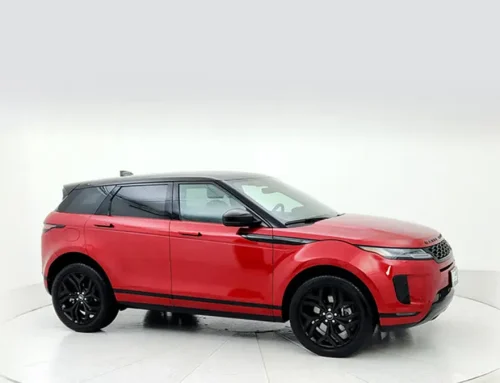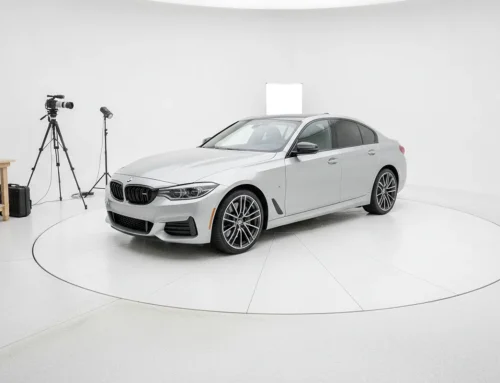
A car on turntable setup stays consistent only when the operator treats every vehicle the same way. Drive the vehicle on, center the body, lock the pose, and let the platform rotate while the cameras stay in place. Skip one of those steps and the next listing looks like it came from a different rooftop, even when the equipment never changed.
Book a call to walk through how this capture sequence fits your vehicles and room, or review the EZTurn dealer turntable before you ask for a site-specific quote.
This guide is for dealer owners, general managers, and group operators who buy the capture system. Detailers and photographers run the steps. They are not the buyer. The sequence below is the operator path for one vehicle. It is not a definition of a turntable, a studio floor plan, or a price sheet.
What a car on turntable workflow is for
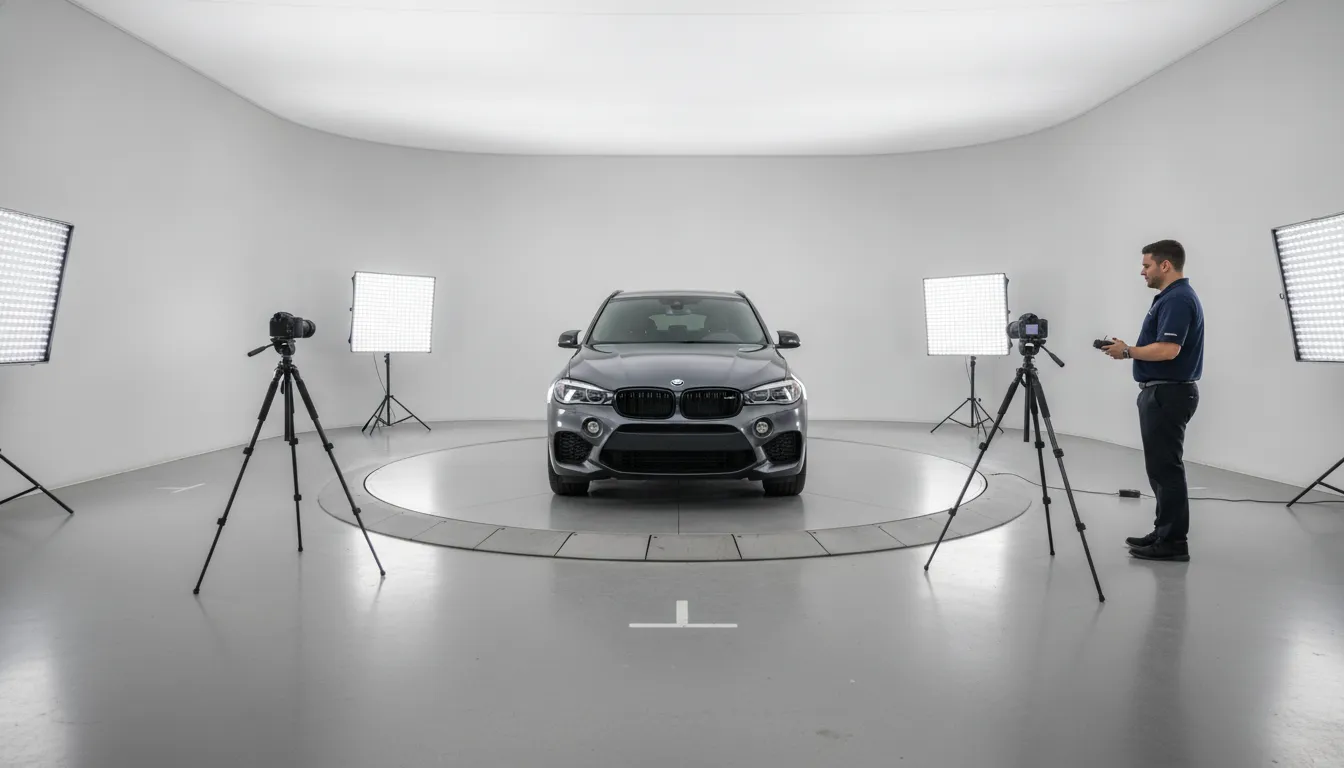
Dealers use a rotating platform when exterior frames and a 360 spin have to match across a whole inventory. The vehicle moves through the shot, and the camera stays on its mark. That split is the point of the setup. A fixed camera at a marked floor spot records the same angle every time the table completes a turn.
EZ360 sells that platform as the EZTurn, separate from the automated 4K photo studio and from CarMagic AI walkaround software. The studio adds cameras, diffuse LED lighting, photographic walls, and a computerized production system. The software line is a different offer. Do not treat a phone walkaround as the same job as a vehicle sitting on a table indoors.
The product page describes an 18-foot table that EZ360 says can handle motorcycles through heavy-duty trucks, with a reinforced galvanized stainless steel frame, epoxy tops, and a 1.5 HP motor with a variable frequency drive. Those are product facts for the buyer. The operator still has to place the vehicle. Hardware does not center a car by itself.
Groups feel the gap first. One rooftop that creeps the nose left, and another that stops with the wheels turned, will publish two different looks under the same brand. A written sequence is how a general manager keeps those rooftops aligned without standing on the floor for every VIN.
Stage the vehicle before it rolls on
Most bad spins start in the lane, not on the table. Give the operator a short pre-drive check so the vehicle arrives ready to shoot. The goal is a clean, predictable vehicle, not a full detail-bay rebuild before every photo set.
- Confirm the VIN, stock number, and that this unit is released for photos. A car still in recon wastes a rotation.
- Close doors, the hood, the trunk, and the fuel door. Fold mirrors only if your standard says so, and do it the same way every time.
- Set the wheels straight. A turned front wheel shows up in every side frame of the spin.
- Clear obvious lot debris from the paint and glass. Deep paint correction is a different work order.
- Remove dealer plates, suction-cup signs, and hanging tags that are not part of the published photo standard.
- Note ride height and add-ons. A lifted truck or a bed cap changes where the body sits in the frame.
Write those six checks on a card at the entrance to the bay. New operators follow a card. They do not remember a meeting. If two stores share a brand, use one card. Local habits are how a group ends up with two photo styles.
Weather and wash timing matter too. A wet vehicle just pulled from the wash will throw reflections that a dry one does not. Let it drip, then do a last wipe of the glass before the drive-on. That is a floor habit, not a software setting.
Center the car on the turntable
Centering is the step that makes the next fifty vehicles look related. The platform rotates around a middle point. If the vehicle is not on that point, the nose and tail swing wide, and the crop changes as the table turns.
Use floor marks, not a guess. A center line on the approach, plus a stop mark for a common sedan and a second mark for a long truck, is enough for most stores. The driver lines up the vehicle with that center line, rolls on slowly, and stops when the body matches the mark for that size class.
Then the operator gets out and looks. Sight along the rocker and the center of the table. The gaps from the front bumper and the rear bumper to the edge of the platform should look balanced for that vehicle. A compact car will show more table than a crew-cab truck. That is fine. What you want is the same placement rule, not the same inches of visible table.
Reset if the vehicle sits crooked. A small angle at the stop becomes a large slide in the side views. It is faster to pull off and re-center than to edit a whole spin later. Nobody should stand on the moving platform to nudge a tire.
EZ360 says a detailer using the connected shoot-and-publish path can take pictures in seven to nine minutes. That figure is a company claim about the software-assisted path, not a promise that every table install hits it. Centering done twice will blow past any target. Centering done once, against marks, is what keeps the bay moving.
Leave a clear walk-off. The driver needs a path off the platform that does not cross a camera or a light stand. Mark that path on the floor too. A tripod kicked between cars is a consistency problem and a safety problem.
Lock the pose, then lock the cameras
Once the vehicle is centered, freeze the pose before anyone starts a rotation. Set the transmission in park, set the brake, and shut the engine off unless your standard needs a specific lamp on. Straighten the steering wheel again. Confirm every door is latched.
People leave the platform. A spin with a technician in the frame, or a door swinging open at frame 20, is a reshoot. The operator stands off the table with the controller. EZ360 describes a wireless control unit that starts, stops, and reverses the motor. Use it from the marked operator spot, not from the running board.
Cameras stay on their marks. If you shoot with a studio package, the fixed cameras and diffuse LED panels are part of that room, not something to drag per car. If you are evaluating a table on its own, still pick one camera height and one distance and tape them. Moving the tripod “a little” for a tall SUV is how two listings stop matching.
The SWGDE lighting guide says to balance lights for even illumination and to angle them so glare stays down. Dealer paint is not forensic evidence, but the same idea applies in a photo bay. Soft, even light from a fixed position keeps a dark hood from blowing out on one side and going dull on the other. Do not add a handheld light for one hero vehicle, because the next operator will not repeat that setup tomorrow.
Check the first frame before the full turn. If a light panel reflects as a hard white block in the door, shift that panel once and mark the new spot. Then leave it. Per-car lighting tweaks feel helpful and destroy the set.
Run the spin the same way every time
Start the rotation only after the pose and the cameras are set. Let the motor do the move. A variable frequency drive is there to start and stop smoothly, so the body does not jerk between frames. Do not have someone push the vehicle to “help” the table.
Pick one direction and one speed for the store, and write them down. Forward for every exterior spin is a simple rule. Reverse is useful when you need to correct a stop, not as a second style. If a group has three rooftops, those three should share the rule.
Watch the first quarter turn. Look for a mirror that folded itself, a belt hanging out a door, or a wheel that crept. Stop, fix the pose, and start over. Publishing a spin with one bad quadrant teaches shoppers to distrust the whole set.
Keep the operator out of the reflection. Glass and glossy paint will show a person, a phone, and an open bay door. The marked operator spot should sit outside the camera view and outside the main reflection in the side glass. If you can see the operator in the test frame, move the spot, not the car.
When the turn completes, stop on the same index you started from. A spin that ends a few degrees off makes the next still set harder to line up. Then release the vehicle only after the cameras have finished writing files. Rolling off early is how a store loses the last frames.
Hand off what the table does not capture
A turntable is an exterior tool. It rotates the vehicle in front of fixed cameras. It does not shoot the cabin, the odometer, the open trunk, or a wheel close-up. EZ360’s studio description is clear that an operator still captures the interior panorama and the detail photos. Plan that handoff or the listing goes live with a pretty spin and an empty inside.
Use this split so each handoff has an owner.
| Step | Who | Done when |
|---|---|---|
| Pre-drive check and straight wheels | Detail or lot porter | Doors are shut, debris is off, and tags are removed. |
| Center on the platform | Driver, then operator | The body matches the size mark and looks square. |
| Lock pose and clear the table | Operator | Park and brake are set, the engine is off, and nobody is on the platform. |
| Exterior spin and hero frames | Fixed cameras | Use one direction and one speed, then stop back on the index. |
| Interior panorama and details | Operator, off the spin | Cabin, trunk, wheels, and the required close-ups are saved. |
| Publish review | Photo lead or manager | The VIN matches, no people are in frame, and the crop matches the set. |
Do not blend this path with an outdoor walkaround product. CarMagic AI, which the site also presents under the SpinSmart name, is a separate software offer for a person walking a camera around a vehicle. It is not a stage of the table workflow, and it is not included in the turntable price. If a rooftop has no room for a table, that is a different buying conversation. See the photo studio page for the room-based system, and keep the outdoor software decision on its own page.
Groups should name one photo lead per store who can reject a set. The reject reasons stay short: off center, person in frame, wheel turned, interior missing. A rejected set goes back to the same operator the same day, while the vehicle is still on site.
What to decide before you ask for a quote
A workflow page cannot size your building. It can tell you which facts to bring to a quote call so the answer matches your lot.
- The longest and heaviest vehicles you actually stock, not the average car.
- How many VINs a week need exterior spins, and who on staff will run the table.
- Whether you already have cameras and lights, or you need the studio package around the table.
- The bay you would use, including door width, ceiling, and where a driver can walk off.
- How photos reach the website today, and who checks a VIN before it publishes.
Advertised starting prices are not an installed quote, and they do not include every site change a building might need. Read car turntable cost when you are ready to compare the turntable with the studio package. Use this article to judge the daily steps, not the budget.
The five-year warranty stated on the site applies to the EZTurn table unless a signed warranty says otherwise. Do not read it as a promise about cameras, software, or a contractor’s floor work. Ask for the warranty terms in the proposal.
Skip the home-garage version of this topic. A driveway turntable that spins a car so the driver can exit a tight parking spot is a different product and a different buyer. EZ360’s customers are dealerships and dealer groups in the United States and Canada.
Ready to compare this sequence with your bay? Call (214) 325-1665 and ask for a quote on the EZTurn or the studio. Have your vehicle sizes and a rough room size ready.
Frequently asked questions
Does the driver stay in the car during the spin?
No. After the vehicle is centered, parked, and shut down, everyone steps off the platform. The operator runs the motor from a marked spot off the table. A person in the seat or in the side glass means a reshoot.
Who captures the interior if the table only rotates the car?
The operator does, as a separate step. EZ360’s studio materials say an operator still shoots the interior panorama and the detail photos. Schedule that work in the same visit so the listing is not exterior-only.
Can one workflow cover a compact car and a heavy-duty truck?
Use one sequence and two stop marks. The steps do not change. The stop position does, because a longer vehicle has to sit on the same center point. Confirm the table you are buying is specified for your heaviest truck before you write the standard.
Is a phone walkaround the same as a car on a turntable?
No. A turntable keeps the cameras fixed and turns the vehicle. A walkaround moves the camera around a parked vehicle and belongs to a separate software offer. Pick the path that matches the room and the staff you have. Do not describe them as one subscription.