


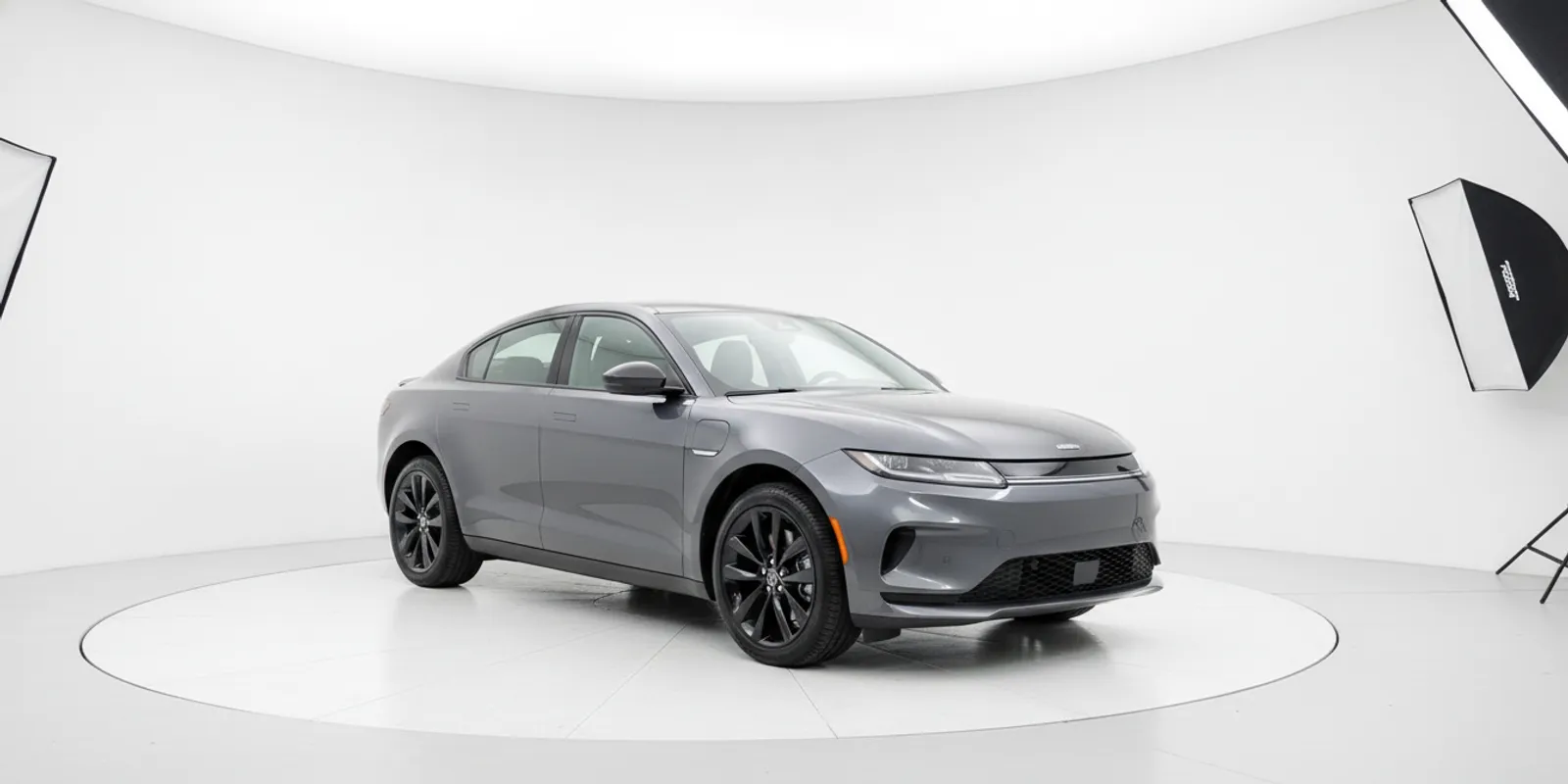
Can an AI car photo editor help make vehicle photos more consistent across multiple dealerships? Yes, it can support a shared imaging process, but software alone cannot guarantee uniform results. Dealer groups still need clear capture standards, reliable equipment, defined review steps, and an owner for the workflow at every rooftop.
Call EZ360 at (888) 883-9360 to discuss your imaging needs
What does consistency mean across rooftops?
Consistency is more than applying the same background to every vehicle. A buyer should be able to move between listings from different locations and see a recognizable presentation. Vehicle framing, the amount of space around the car, lighting, image order, and the overall look should feel like parts of one merchandising system.
That standard matters to the people responsible for the group’s inventory and marketing. If each store chooses its own photo setup, a central team may have to resolve avoidable differences later. A shared standard gives store teams direction while helping group leaders assess whether the process is being followed.
An AI car photo editor can be one piece of that system. Depending on the product and its setup, AI-assisted imaging may help make outputs more uniform. It does not fix every source of variation. A vehicle photographed from a different angle, inconsistent capture choices, or a missed step in the process can still affect the final media.
Where can AI help, and where does the workflow matter?
It helps to separate capture from editing. Capture is how a team records the vehicle. Editing is what happens to the image or media afterward. A group can use editing tools to support a consistent presentation, but the tool needs suitable source material and rules for how results are handled.
- Capture standards: Set the intended camera position, vehicle framing, and required views. Make the instructions practical enough for staff to repeat.
- Presentation rules: Decide what a finished listing should look like, including background and image sequence. Document exceptions for unusual vehicles or conditions.
- Editing and review: Determine which tasks AI handles, what staff should check, and how an incorrect or inconsistent result gets corrected.
- Group oversight: Give each rooftop a clear point of contact and make it possible to compare the process across locations.
For dealership buyers exploring AI vehicle imaging and walkaround media, EZ360 presents CarMagic AI on its CarMagic AI and SpinSmart page. The names overlap; they should not be assumed to mean separate, separately priced plans. Ask for a walkthrough of the specific workflow under consideration and confirm what is included before making a decision.
How should a dealer group evaluate an AI car photo editor?
Start with a real workflow question, not a feature checklist. Choose a few representative vehicles and locations. Include the situations that create the most variation for your team, such as different store environments, vehicle sizes, and staff experience. Then ask the vendor to demonstrate the actual process from capture through review.
- Define the result you want. Describe the visual standard in plain terms. For example, specify how the vehicle should be framed and what a shopper should see in the listing. Avoid relying on a vague request for “better” or “more professional” photos.
- Test repeatability. Have the process used across more than one rooftop. Review whether teams can follow the same steps and whether the resulting media fits the group’s standard.
- Ask what requires a person. Find out which work is automated and which tasks still need staff. Ask who reviews outputs and how corrections are made. Do not assume the entire imaging process is unattended.
- Check exceptions. Ask how the workflow handles vehicles or captures that do not fit the normal pattern. Understand what staff should do when the result needs attention.
- Confirm the operating details. Clarify hardware, software, setup, ongoing responsibilities, and current advertised pricing. Request an installed quote for your situation instead of assuming a starting price is the total project cost.
Use a short evaluation scorecard. Rate each rooftop’s adherence to the agreed capture steps, the consistency of the final media, the amount of staff review required, and the ease of correcting exceptions. The goal is not to grade individual employees. It is to reveal whether the process and tools work together in the conditions your stores actually face.
Why can results still vary between dealerships?
Variation often starts before an image reaches the editing stage. Teams may interpret instructions differently, capture areas may differ, and local processes may have grown over time. Turnover or competing responsibilities can also make a complicated standard hard to follow. An AI tool cannot make an unclear process clear by itself.
For that reason, appoint a group-level owner who maintains the standard and gathers feedback from store teams. Keep instructions brief and visual where possible. When a team finds a recurring problem, update the workflow instead of asking each location to invent its own workaround. Then review a sample of listings periodically to see whether the agreed approach is holding up.
Also ask what the AI system changes and what it leaves alone. Establish internal rules for checking that the final presentation remains appropriate for the vehicle and the dealership. If you have broader questions about responsible AI practices beyond vehicle imaging, NIST provides government information on technology and AI.
What should dealership leaders take away?
An AI car photo editor can contribute to consistent vehicle media across a dealer group, but the strongest approach pairs software with repeatable capture, clear standards, and human review. Judge a solution in a practical multi-location test, and verify exactly what the product does, what staff still handle, and how exceptions are resolved.
Explore more dealership resources and updates as you shape your process. A focused evaluation helps your team decide whether AI-assisted imaging fits the way your rooftops merchandise inventory.
With a shared standard and a realistic review process, dealer groups can make a more informed decision about using AI to support consistent vehicle photos across locations.


