A dealership can produce an impressive 360 vehicle view and still leave buyers without the still photos they need. The right purchase decision starts by defining the complete media workflow, not by choosing the most automated-sounding feature.
Good 360 car photography software should create a stable, listing-ready spin and useful high-resolution images. It should also fit the store’s capture path. And it should make clear which interior and detail shots a person must still take.
Compare the output, the capture work, the building, the volume, the staff, and the publishing path together. For example, a walkaround workflow such as CarMagic AI walkaround software is a different offer from an automated photo studio or a physical turntable. Before you look at setups, write down what every vehicle must show. Also write down where a person still has to judge the shot.
Call (888) 883-9360 to see 360 car photography software on vehicles you already stock.
What 360 car photography software has to produce
A dealer should judge 360 car photography software by the complete merchandising package, not by the spin alone. The listing needs a spin shoppers can turn. It also needs stills that answer questions before a visit or a call.
Write that package down before you sit through a demo. List the spin, the exterior stills, the interior views, and the closeups your pages already use. If a vendor shows only the spin, ask where the other photos come from. They may need a second shoot later in the day.
Start with a spin that loads and lets shoppers turn the vehicle. The exterior should look the same from car to car. The spin should sit on the listing, not in a separate viewer. A spin shows shape and condition fast. It still cannot show every detail clearly.
The software should also produce a useful set of exterior stills. Cover the three-quarter, side, front, and rear views. Keep them consistent so shoppers can compare cars. Cox Automotive found that shoppers specifically look for these views. The study also looked at seats, the dash, the engine, the wheels, and the trunk. Cox Automotive’s Power of Pictures research is a useful benchmark for a full photo set.
Those findings matter because a spin does not replace still photography. Cox studied Autotrader listings from October through December 2017. Multiple custom photos drew 349% more VDP views than a stock photo on used vehicles. The gap was 133% on new vehicles. These are Cox and Autotrader observations, not results EZ360 promises.
Interior views need their own line on the list. Buyers should see the front seats, the back seat, the dash, the controls, and the cargo area. Closeups should show wheels, tires, badges, screens, accessories, and visible wear. Condition photos build trust when they show wear as well as clean paint.
EZ360’s CarMagic AI walkaround software page says a one-minute walkaround can yield a stabilized spin, 4K exterior pictures, background replacement, hotspots, and closeups. Ask vendors whether those pieces arrive together. Ask if they stay consistent and reach the listing you already use. The standard is a full set a shopper can use.
Match the software to the lot, the studio, or both
The right capture path depends on where inventory moves and how much volume each rooftop handles. It also depends on how much control the team needs over light and background. Lot software can keep vehicles outside and still give staff a repeatable capture. A physical setup gives more control to stores that can route cars through it.
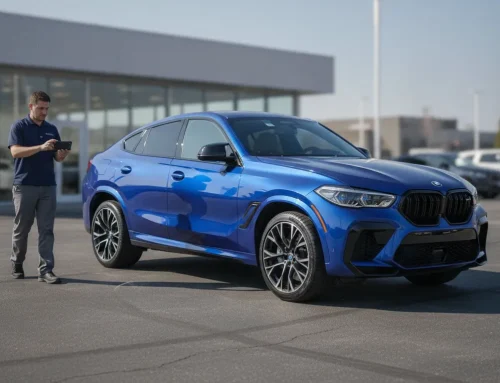
CarMagic AI, also presented as SpinSmart, is the walkaround software option. It is suited to dealerships that need consistent capture without moving every unit into a dedicated room. EZ360 says the software can stabilize a walkaround, replace backgrounds, and publish media to a dealer website. Those capabilities describe the software offer, not the separate EZTurn hardware.
| Capture path. | Best fit. | What you still staff. | Advertised starting point. |
|---|---|---|---|
| Lot walkaround software. | Stores that need consistent media without moving every unit inside. | A team member captures each vehicle on the lot. | CarMagic AI as low as $95/month. |
| Physical turntable. | High-volume operations that want a dedicated rotating platform. | Staff position vehicles and run the capture workflow. | 18-foot EZTurn at $24,900. |
| Automated photo studio. | Stores that want controlled light and a repeatable indoor capture environment. | An operator shoots the interior panorama and detail photos. | Studio from $49,950. |
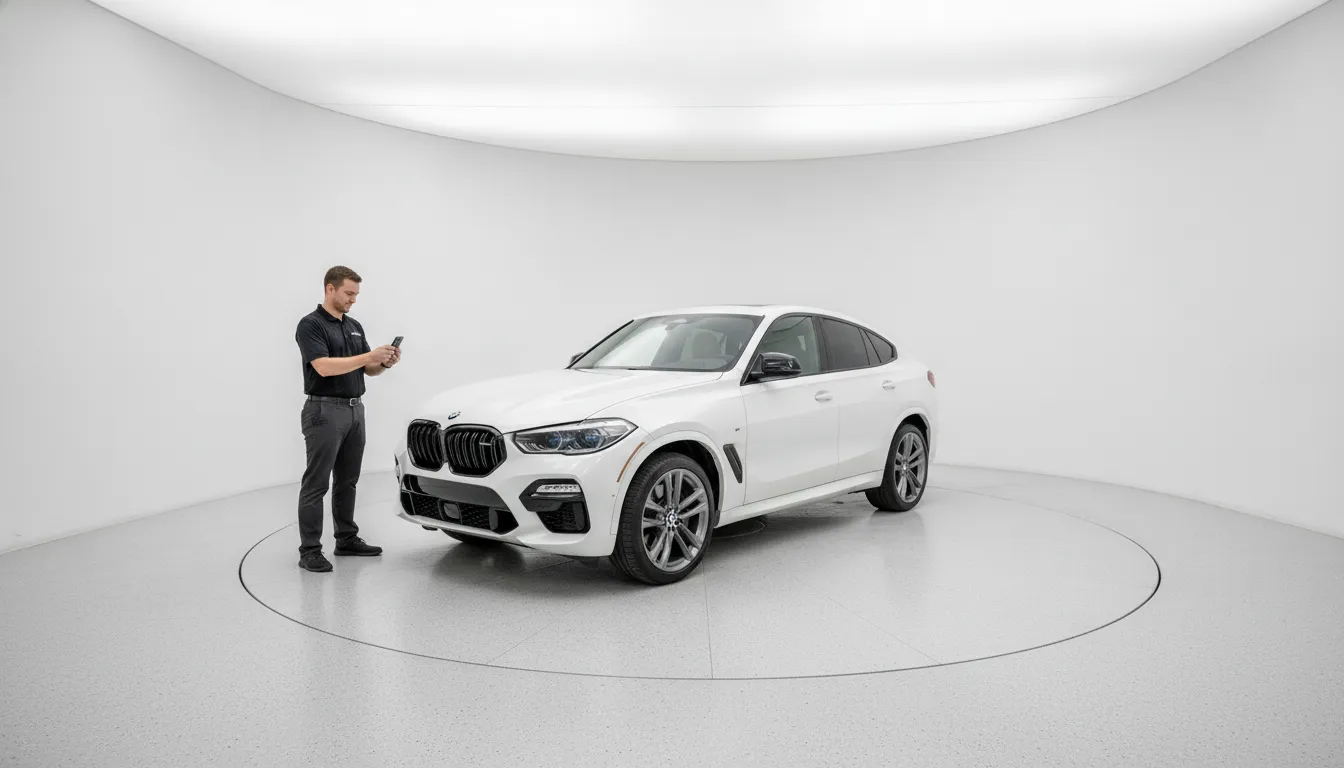
The physical options are separate from the software. The EZTurn turntable is a physical table that rotates the vehicle. By contrast, a turntable graphic shown inside a digital background is an on-screen design element. It does not mean the vehicle is sitting on an EZTurn table.
An automated 4K photo studio may make sense when volume and controlled light justify a dedicated installation. Automated does not mean unattended. An operator still captures the interior panorama and detail photos, and staffing needs will vary by location.
Some dealer groups may use both paths. A rooftop can use CarMagic AI or SpinSmart on the lot, while a higher-volume hub routes selected inventory through a studio or physical turntable. That model can fit a distributed operation, but the best mix depends on each address, workflow, and volume. Advertised starting prices are not installed quotes, and no path guarantees the same result at every dealership.
Do not treat the three rows as one subscription. The walkaround software, the EZTurn table, and the photo studio are separate offers with separate starting prices. A store that buys the software does not receive a studio. A store that buys a table still needs a plan for interiors, closeups, and the page where the media will live.
Start with the constraint that creates the most friction. If vehicle movement is the problem, begin with lot-based software. If lighting consistency and throughput are the priority, evaluate a dedicated capture space. Then confirm staffing, vehicle routing, and integration requirements before treating a starting price as a project budget.
What a person still has to shoot
Automation can make vehicle imaging faster, but it does not remove the operator from the process. In a studio, someone still moves the vehicle into position, shoots the interior panorama, and captures detail photos. That person also notices when a door is open, a mat is out of place, or a surface needs attention before the media reaches a listing.
Walkaround capture has the same human requirement. A team member must walk around the car, keep the camera path consistent, and decide whether the light is working. Weather, glare, reflections, shadows, and crowded backgrounds can change from one vehicle to the next. Software can stabilize and organize the result, but it cannot decide whether a frame presents the vehicle honestly and clearly.
EZ360 says a detailer can take pictures in seven to nine minutes. That is a company description, not a guaranteed time for every store. Vehicle condition, staff experience, traffic at the rooftop, and the number of photos required can all affect the actual workflow. The useful question is not whether a system is fully unattended. It is how much judgment and handling it removes from the person doing the work.
When comparing 360 car photography software, ask vendors to describe the human steps in plain language. Who shoots the interiors? Who checks that plates, damage, accessories, and vehicle condition are represented correctly? Who reviews the result before it reaches the dealer site? If a frame is blurred, blocked, or poorly lit, who fixes it, and how quickly?
Training matters as much as equipment. Ask how a new hire learns the camera path, interior panorama, detail shots, and quality checks. Request the written workflow, the expected review standard, and the escalation path for a bad capture. A system may be simple after practice, but a new operator still needs a repeatable process and feedback from someone who knows the standard.
Staffing is also a coverage question. Who covers the lot when the usual operator is off, and who reviews media after hours if a unit has to go live the same day? A short capture time only helps if a trained person is actually available when the car is ready. Build that into the buying note, not into a hope that the software will run itself.
It also helps to separate capture responsibilities from output claims. A walkaround platform may create a stabilized spin, closeups, and other listing media from one session. Read what a walkaround produces, then ask what the operator must do before those outputs are ready. That distinction gives a dealership a more realistic staffing plan and a better basis for comparing vendors.
Questions to settle before you buy
A purchase decision should clarify the workflow, the publishing destination, and the costs your team will actually carry. Use these questions when comparing a 360 car photography software plan with a broader capture system.
-
What media will the system produce for each vehicle? Ask whether the output includes a 360 spin, exterior stills, interior views, and closeups. A spin can add useful context, but it does not replace the specific photos shoppers expect to inspect. Confirm which outputs are included in the selected offer, rather than assuming software, a studio, and a turntable are one product.
-
Where will the files appear after capture? Media should publish to the dealership website and the vehicle detail page, or VDP, where shoppers view inventory. A separate gallery alone may not support the merchandising workflow your stores need. EZ360 says its CarMagic AI and 360 walkaround software publishes vehicle media to the dealer site and supports a VDP player.
-
Is background replacement required, optional, or limited? Some stores want a consistent lot or studio appearance, while others may prefer the original setting for certain inventory. Ask whether background replacement can be selected when needed and whether it applies to exterior and interior images. Also confirm who reviews the results before they reach listings.
-
How will multiple rooftops keep the same look? Request a clear standard for framing, lighting, backgrounds, image order, and publishing. Ask how teams handle differences in facilities, vehicle types, and staffing. Consistency usually depends on the defined process and review expectations, not only on the camera or software. Personnel still move vehicles and capture interior or detail images.
-
What does the advertised price include? EZ360 lists CarMagic AI walkaround software as low as $95 per month, a photo studio starting at $49,950, and an 18-foot EZTurn turntable at $24,900. These are advertised starting prices, not installed quotes. Ask about hardware, installation, integration, support, training, usage limits, and any required facility work.
Read seller models carefully, too. A figure such as under $7 per VIN at 200 VINs per month, including labor, is a model rather than a fee or a proven saving. It is not a guarantee of ROI, payback, or a universal cost for your stores. Compare the written scope with your actual rooftops, volume, staffing, and publishing requirements.
Frequently Asked Questions
What should dealers compare when choosing 360 car photography software?
Compare the capture method, output quality, publishing workflow, supported vehicle types, and fit with your current merchandising process. Confirm whether the platform supports cars, trucks, SUVs, vans, RVs, motorcycles, and boats, and whether it handles both interactive media and individual listing photos.
Do we need a turntable to use 360 car photography software?
Not necessarily. Some platforms create a digital 360 experience from a walkaround capture, while a physical turntable is separate hardware. Review the EZTurn table separately if your dealership wants a controlled rotating platform rather than a software-based capture workflow.
Can the software replace regular vehicle photos?
No. A 360 experience can complement still photography, but shoppers also need clear exterior and interior views, including seats, the dashboard, wheels, and trunk. Ask whether the platform produces the individual images your vehicle detail pages require.
Is software-only capture right for every dealership?
The right choice depends on your rooftop workflow, staffing, vehicle mix, and consistency needs. A walkaround platform may fit stores seeking flexible capture, while an automated photo studio may better suit a store that wants a controlled capture environment. Confirm the operator steps and publishing process before buying.
See the software on your own inventory
A checklist is only useful if you can watch it on cars you already stock. Bring one lot photo set and one question about staff time. EZ360 can show how CarMagic AI walkaround software compares with a studio path for those stores.
Call (888) 883-9360 to book a call and review 360 car photography software for your rooftops.