


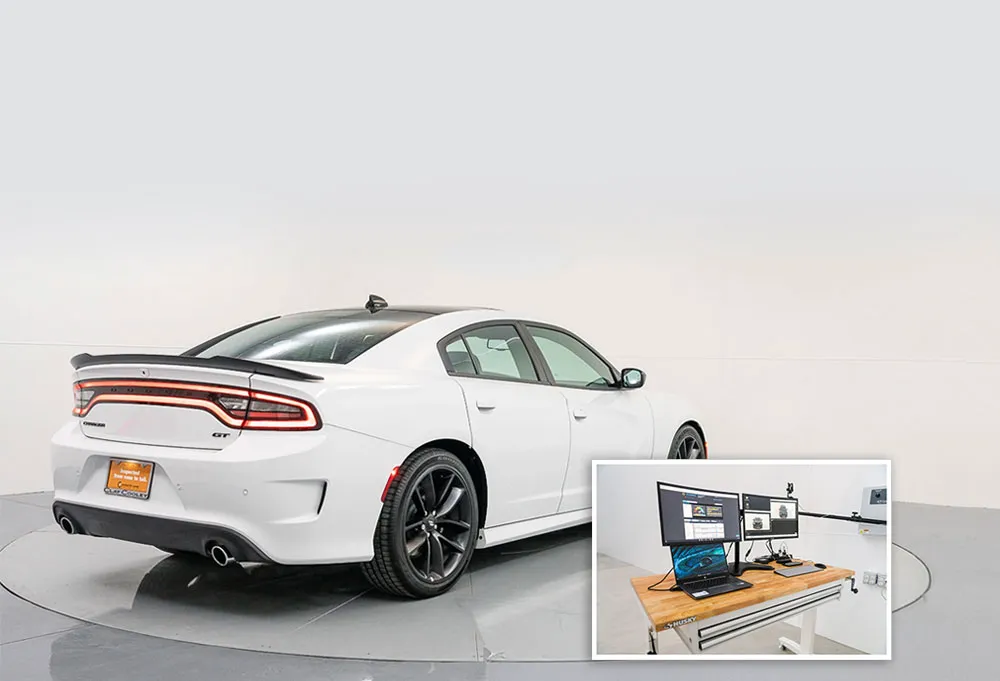
A car dealership photo studio can make vehicle photos more consistent. It also changes how a rooftop uses space, moves inventory, and assigns staff. For a dealer owner or general manager, the first question is not which camera to buy. It is whether the store has enough volume, room, and a steady process to support a fixed shoot bay.
A car dealership photo studio is a set room for consistent vehicle photos under controlled light. It usually pairs capture hardware, a turntable or booth, and publishing tools. It can fit a rooftop that needs the same look on every car. It is not unattended. Staff still move vehicles and shoot interior and detail photos.
Book a call at (214) 325-1665 if you want a studio, a turntable retrofit, and walkaround software compared for the stores you run today.
Before you ask for a quote, separate the building decision from the equipment decision. A full studio may fit one rooftop. Another store may do better by adding to an existing booth or turntable, or by starting with a walkaround. The right choice gets clearer when you look at how cars move through the store today and what a fixed shoot area would need.
When a car dealership photo studio fits
A car dealership photo studio makes sense when getting the same photos every day has become an operations problem, not just a camera problem. Several rooftops may need cars to look the same across listings. Or one store may have a steady flow of inventory moving through recon every day. In either case, a fixed bay gives the team one place to shoot. The result no longer depends on each car, each photographer, or that day’s weather.
That control matters outdoors. EZ360 says changing sun, rain, and snow can alter photos from one day to the next. A studio with controlled light makes the shoot more predictable.
A 2024 Redline survey, reported by Auto Remarketing, asked 372 adults who had shopped for a vehicle online. In that survey, 87% said they would click a vehicle with a clear, well-lit, well-framed photo over one with a poor photo. The survey was vendor-commissioned. It does not prove that a studio increases sales or profit. It does show why a clear first photo is worth a consistent process.
Workflow is another signal. If vehicles already move from wash or detail into recon, a fixed bay can be the next handoff. Finish the vehicle, bring it to the same capture area, complete the required images, and send the media to the listing workflow.
The studio is not unattended. An operator still captures the interior panorama and detail photos. The value is a set place and a set path, not the removal of every human step.
Not every store needs to start there. A lower-volume dealership, or one still testing its merchandising process, may begin with CarMagic AI walkaround software and a phone-based walkaround. That can be a practical first step when volume, staffing, or the building do not yet justify a dedicated bay. For a closer look at the media that approach can produce, see this guide to car walkaround video software.
The decision is not about hitting one vehicle count. It is about whether the store can run the bay. Ask whether multiple stores need the same visual standard, whether weather repeatedly interrupts capture, and whether recon can feed a defined shoot location. If those conditions are present, a photo studio may be the next step for the building. If they are not, start with a flexible walkaround process and build from evidence about the store’s actual workflow.
What to plan before you ask for a quote
A useful quote starts with the dealership’s workflow, not just a list of equipment. Before you speak with a vendor, walk through the space, the lighting conditions, the people who will operate the process, and the parts of your current setup you want to keep. That gives the conversation enough context to distinguish a complete build from a targeted upgrade.
Space and vehicle flow
Measure more than the open floor area. Consider how a vehicle enters, turns, stops for capture, and exits without disrupting service lanes, detail work, or inventory movement. EZ360 describes a 24 by 27 foot room as one example of a small install, not a minimum every store must meet. Larger steel-building examples, including layouts that combine wash and detail areas, also exist. The right footprint depends on your building, vehicle mix, throughput, and local construction decisions.
Ask which components need to fit inside the capture area and which can sit elsewhere. The automated photo studio page outlines the studio components, including the turntable, photographic walls, diffuse LED lighting, cameras, and production system. If you already have a booth or turntable, ask whether the new system can augment it instead of replacing everything. EZ360 says a dealer can also use its own contractor to finish walls or flooring, so clarify exactly what your team will provide.
Light and operating conditions
EZ360’s rationale for a studio is practical: outdoor sun, rain, and snow change from day to day, making consistent photography harder. A controlled bay uses diffuse LED lighting and photographic walls to create a repeatable environment. During planning, note windows, overhead fixtures, reflective surfaces, and any conditions that could affect the background or vehicle finish. This is a workflow decision as much as a photography decision.
Staffing and the right level of build
Automation does not mean the capture bay runs unattended. Someone still needs to move the vehicle and shoot the interior panorama and detail photos. Identify who will handle those steps, when they can work, and what happens during peak inventory periods or staff absences.
Finally, decide whether you need a full studio or a system that extends an existing booth or turntable. Bring that decision, your measurements, and your staffing plan to the quote discussion. For context on advertised starting prices and what a quote still needs to cover, see what to budget for a turntable and studio. Those details vary by configuration, so avoid treating a starting figure as an installed quote.
Questions to ask before you commit
A car dealership photo studio quote is easier to compare when every rooftop answers the same questions. Bring a short list to the call. You are checking fit, not collecting a brochure.
- Which vehicles must the bay handle? Passenger cars, tall SUVs, and light trucks need different clearance. Ask what the current table is rated to hold, and do not assume an older article’s load number still applies.
- Where does the car enter and leave? A bay that blocks the wash rack or the service lane will sit idle. Sketch the path from detail to the shoot spot and back to the line.
- Who runs the bay on a busy morning? Name the person, the backup, and the minutes you can spare per vehicle. Someone still shoots the interior panorama and the detail photos.
- What do you already own? If a turntable or booth is in place, ask whether the new work augments it. A dealer can also have its own contractor finish walls or flooring. Confirm what is in the quote and what is not.
- How will the media reach the website? Ask which inventory system receives the photos and how long publication usually takes. Treat any speed claim as a workflow description, not a service promise, until it is in writing.
Write the answers down before you compare vendors. A group with three rooftops should do this once per store. The store with a spare bay and a steady recon line is a different project from the store that still shoots in the back lot.
Two more checks keep the quote honest. Ask whether the five-year warranty being discussed covers only the turntable, because that is what the EZTurn page states unless a signed warranty says more. And ask which rooftops should stay on software. A smaller store can keep using a phone walkaround while the busiest store gets the bay.
Studio, software, or a photographer
For a dealer group operator, the choice depends on where consistent capture fits into the operation. A dedicated automated photo studio creates a controlled shoot bay at a rooftop. That can suit a high-volume store or a group that wants a repeatable facility-based workflow, with an operator still handling vehicle movement, interior panoramas, and detail photos. EZ360 describes its turnkey studio as combining a heavy-duty turntable, diffuse LED lighting, photographic walls, 4K cameras, and a computerized production system. It can also augment an existing booth or turntable.
CarMagic AI walkaround software is a different path. It fits stores that can capture vehicles outdoors and do not yet have a dedicated bay. Outdoor work remains dependent on suitable conditions, so it does not create the same fixed lighting environment as a studio. It may be a practical way for smaller stores in a group to produce walkaround and vehicle media without waiting for a studio installation.
An in-house dealership photographer or a third-party shooter remains another valid operating model. The group may value a person who can manage changing locations, prioritize inventory, and adapt the shoot to each store. That approach still requires a plan for consistency, scheduling, equipment, and weather. It does not have to remain separate from a studio: EZ360 says dealership staff or a third party can operate the studio once it exists.
| Path | Fits when | Watch for |
|---|---|---|
| Dedicated studio. | A high-volume rooftop needs a controlled bay. | Check space, vehicle flow, and operator coverage. |
| Walkaround software. | Stores can shoot outdoors and have no bay yet. | Watch weather and changing outdoor light. |
| Outside photographer. | Flexible people-led coverage is the priority. | Watch scheduling and consistent execution. |
These paths can work together rather than compete. A group might use walkaround software at smaller stores, rely on a photographer for selected locations or assignments, and place a dedicated studio at the high-volume rooftop. The useful comparison is not which option is universally right; it is which combination matches each store’s inventory volume, facility, staffing, and preferred workflow.
Learn more about the automated photo studio before you compare a full bay with a software-first plan for the stores that are not ready for one.
Frequently Asked Questions
How do I know whether my dealership needs a photo studio?
A studio is worth evaluating when your team needs consistent vehicle images across locations, weather conditions, or high inventory volume. Controlled light and a fixed shoot bay can make the process more repeatable than relying on outdoor conditions. Start by reviewing how often weather, changing light, or an inconsistent shooting area delays listings or creates rework.
How much space should a dealership plan for a photo studio?
Space depends on the equipment, vehicle flow, and whether you need room for washing or detailing. EZ360 describes a 24 by 27 foot room as an example of a small installation, not a universal minimum. Larger steel-building examples can include wash and detail space. Confirm turning clearance, access points, staging, and safe movement with the studio provider and your contractor before committing to a layout.
Does a dealership still need an employee to operate the studio?
Yes. A studio can standardize the capture environment, but it is not unattended. An operator still shoots the interior panorama and detail photos. Assign responsibility for moving vehicles, preparing them for capture, checking image completeness, and moving finished media into your listing workflow.
When is walkaround software a better first step than a studio?
Software may be the better first step when your immediate need is faster walkaround video and you do not yet have a practical fixed bay or the volume to justify a dedicated room. CarMagic AI and SpinSmart are overlapping names for EZ360’s walkaround software. Outdoor capture still depends on suitable conditions, so a studio remains the stronger fit when controlled light and a consistent shoot bay are priorities.
Book a call about your stores
If you are weighing a car dealership photo studio, start with the rooftop that struggles most with consistency. Note the space you can spare, who would run the bay, and whether a smaller store should stay on a walkaround for now.
EZ360 can walk through a full studio, a turntable retrofit, or CarMagic AI walkaround software as separate options. Advertised starting prices are not an installed quote. A call is the point where site layout, vehicle mix, and staffing get checked against a real configuration.
Call (214) 325-1665 to book a call, or review the automated photo studio page and note your space and staffing questions before you talk.


